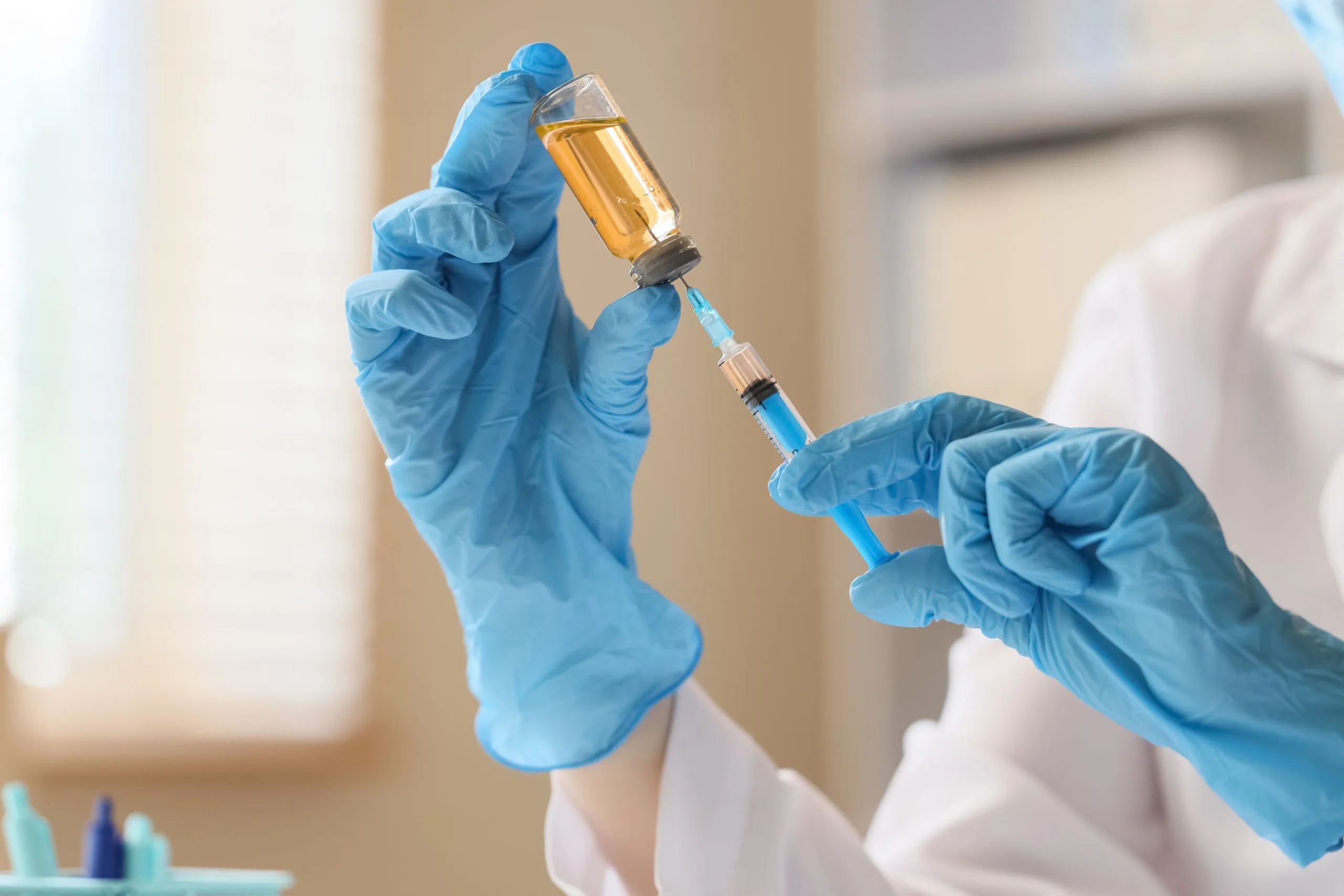
BPC-157 is a synthetic peptide that has gained attention for its potential to support the body’s natural healing processes. Researchers are studying its ability to promote tissue repair, reduce inflammation, and improve recovery from injuries involving muscles, tendons, and ligaments. Originally derived from a protective protein found in the stomach, BPC-157 is being investigated for its regenerative properties and potential role in helping active individuals recover more efficiently from soft-tissue injuries.
BPC-157 stands for “Body Protection Compound-157,” a peptide made up of 15 amino acids – the building blocks that form proteins in your body. Scientists created a stable, synthetic version to study its healing properties.
Think of BPC-157 as a “fix-it” signaling molecule. It may tell injured areas to repair damaged tissue faster and calm inflammation – two key parts of bouncing back from an injury.
Peptides are naturally occurring molecules that are shorter than proteins but work in similar ways, acting as messengers that trigger specific cellular responses. BPC-157’s smaller size allows it to move through the body more easily and act on specific receptors involved in healing and inflammation. It is considered a research peptide, meaning most of what we know comes from laboratory and animal studies rather than large human trials, so it should only be used under medical supervision.
The excitement around BPC-157 stems from its proposed mechanisms for healing. While research is ongoing, the evidence suggests it works on multiple levels to support the body’s natural repair processes.
Promotes angiogenesis: Encourages new blood vessel growth, delivering more oxygen and nutrients to injured tissue for faster repair.
Supports collagen production: Collagen is essential for rebuilding tendons, ligaments, and skin.
Reduces inflammation: Helps modulate the inflammatory response, easing pain and swelling during recovery.
Stimulates growth factors: May increase proteins that drive cell growth, proliferation, and differentiation.
Protects existing cells: May help shield tissue from further damage while it heals.
Aids tendon and ligament healing: Shows particular affinity for repairing the tendon-to-bone connection, an area that heals slowly due to limited blood supply.
At Koléni Health, our focus is comprehensive, medically supervised strategies for active individuals. Our team, under the guidance of Dr. Kabir Rezvankhoo, explores advanced therapies, such as peptides, as one component of a holistic performance recovery plan. We consider BPC-157 within this framework – not as a standalone cure, but as a potential tool integrated into a personalized plan that addresses the root cause of an injury.
The potential applications of BPC-157 extend from acute injuries to overall wellness.
Accelerated healing of muscle, tendon, and ligament injuries
Reduced downtime after an injury
Support for post-surgical recovery
Decreased pain, inflammation, and swelling in joints and soft tissues
Improved gut health, which can have a systemic anti-inflammatory effect
Improved resilience during heavy training periods
Athletes with recurring strains or sprains
Individuals recovering from orthopedic surgery
Fitness enthusiasts dealing with persistent tendonitis or muscle soreness
Active adults with slow or stalled recovery from soft tissue injuries
People experiencing persistent soreness or fatigue after workouts
This peptide fits into the goals of our athletic development services, where the objective is not just to perform but to recover effectively and build long-term resilience.
BPC-157 is most commonly administered through subcutaneous injections near the site of injury or as oral capsules. Injections are often preferred for localized musculoskeletal injuries, while oral forms may be used for systemic or gut-related issues. The right method should be determined by your provider, not by online recommendations.
So, what is BPC-157 for injury recovery? It is a promising, investigational peptide that may enhance the body’s natural ability to heal soft-tissue injuries by promoting tissue repair, improving blood flow, and lowering inflammation. For athletes and active individuals in Houston, it represents a potential tool for reducing downtime and overcoming frustrating recovery hurdles. Its use should always be guided by a medical professional as part of a comprehensive treatment plan to ensure safety, quality, and effectiveness.
If you are curious about supportive recovery options, a medically supervised evaluation is the smart first step toward healing well and returning to what you love.

About the Author
Dr. Kabir Rezvankhoo
July 17, 2026